MediaTek Dimensity 9400 Plus
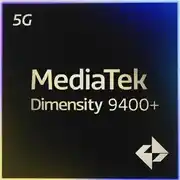
MediaTek Dimensity 9400 Plus: when “Plus” is a real gain
Dimensity 9400 Plus is an overclocked take on MediaTek’s flagship platform, aimed at snappier UI response, stable clocks under sustained load, and faster on-device AI. It keeps the familiar mix of big Arm cores and a 12-core Immortalis GPU, but raises frequencies and updates the game, camera, and wireless stacks. It is the fastest Dimensity in the 9400 series.
Key hardware
-
CPU: 1× Cortex-X925 up to 3.73 GHz, 3× Cortex-X4, 4× Cortex-A720. Larger L2 and shared L3 caches help sustain performance without dips and recover clocks faster after spikes. Versus the regular 9400, the prime X core moves from ~3.62 to 3.73 GHz while the rest of the layout stays the same
-
GPU: Arm Immortalis-G925 MC12 with hardware ray tracing and opacity micromaps for more realistic scenes with complex materials like foliage and hair. Media blocks and thermal solutions in 9400 Plus phones typically hold high FPS longer
-
Memory and storage: LPDDR5X up to 10,667 MT/s and UFS 4.0 with MCQ for faster loads and writes. This helps CPU, GPU, and NPU show their best in heavy workloads
AI and “agentic” scenarios
The chip integrates the NPU 890 with an Agentic AI stack. It supports acceleration techniques like Speculative Decoding+, works with MoE models, and enables FP8 inference. In practice you get snappier assistants, quicker local LLMs, and lower power draw over long sessions.
Camera and video
Imagiq 1090 plays to the strengths of long-focus sensors. A key trick is HDR video across the entire zoom range with smooth switching and reliable autofocus. Claimed capabilities include up to three hours of continuous 4K60 recording, more effective AI segmentation in video, and a “smart” telephoto zoom that preserves detail at extreme magnifications. The pipeline supports capture up to 8K on the codec side, a full audio stack with AI Audio Focus, and Bluetooth recording up to 24-bit 384 kHz.
Gaming: stable frames without the “space heater”
The 12-core Immortalis-G925 is backed by HyperEngine tools including MediaTek Frame Rate Converter 2.0+. It helps maintain target frame rates and save power in supported titles, while hardware OMMs in ray tracing raise visual realism without a major performance hit. For the player this means fewer drops and longer peak gaming time.
Connectivity and positioning
-
5G modem conforming to 3GPP Release 17 with up to 4CC aggregation. Wi-Fi 7 with concurrent tri-band operation and five-stream mode
-
Bluetooth 6.0 with dual radios and long-range phone-to-phone direct links in line-of-sight conditions
-
Faster time to first fix thanks to broader GNSS support and reduced TTFF even without cellular coverage
How it differs from Dimensity 9400
-
Higher prime-core frequency: 3.73 GHz versus 3.62 GHz. This speeds up single-thread-sensitive tasks from UI fluidity to games with a main thread bottleneck
-
Longer-range direct Bluetooth links and expanded Wi-Fi 7 modes
-
New gaming and AI options: MFRC 2.0+, a focus on agentic use cases, and broader support for models and acceleration techniques. The CPU architecture and 12-core Immortalis-G925 remain unchanged
Where it already appears
You can find the platform in retail phones. Devices that emphasize high refresh displays, large batteries, and advanced telephoto zooms show good stability and thermal behavior on Dimensity 9400 Plus.
Takeaways
Dimensity 9400 Plus is an evolutionary yet noticeable upgrade over the 9400. More frequency where you can feel it. Strong graphics with hardware ray tracing and practical optimizations. Long wireless reach with Wi-Fi 7 and extended-range Bluetooth. A push toward agentic AI and stable long-focus video capture. If you want an Android flagship tuned for steady FPS, fast UI response, and advanced connectivity, 9400 Plus delivers without obvious compromises.
SOC Comparison
Compare Dimensity 9400 Plus with other SOCs
Basic
GPU Specifications
Connectivity
Memory Specifications
Miscellaneous
- FLAC
- HE-AACv1
- HE-AACv2
- MP3
- H.265
- AV1
- VP9
Benchmarks
Phones with Dimensity 9400 Plus




Tablets with Dimensity 9400 Plus

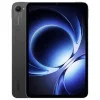
Comparison of Devices with Dimensity 9400 Plus
Compared to Other SoC
Related SoC Comparisons




Share in social media
Or Link To Us
<a href="https://cputronic.com/index.php/soc/mediatek-dimensity-9400-plus" target="_blank">MediaTek Dimensity 9400 Plus</a>