MediaTek Dimensity 9500
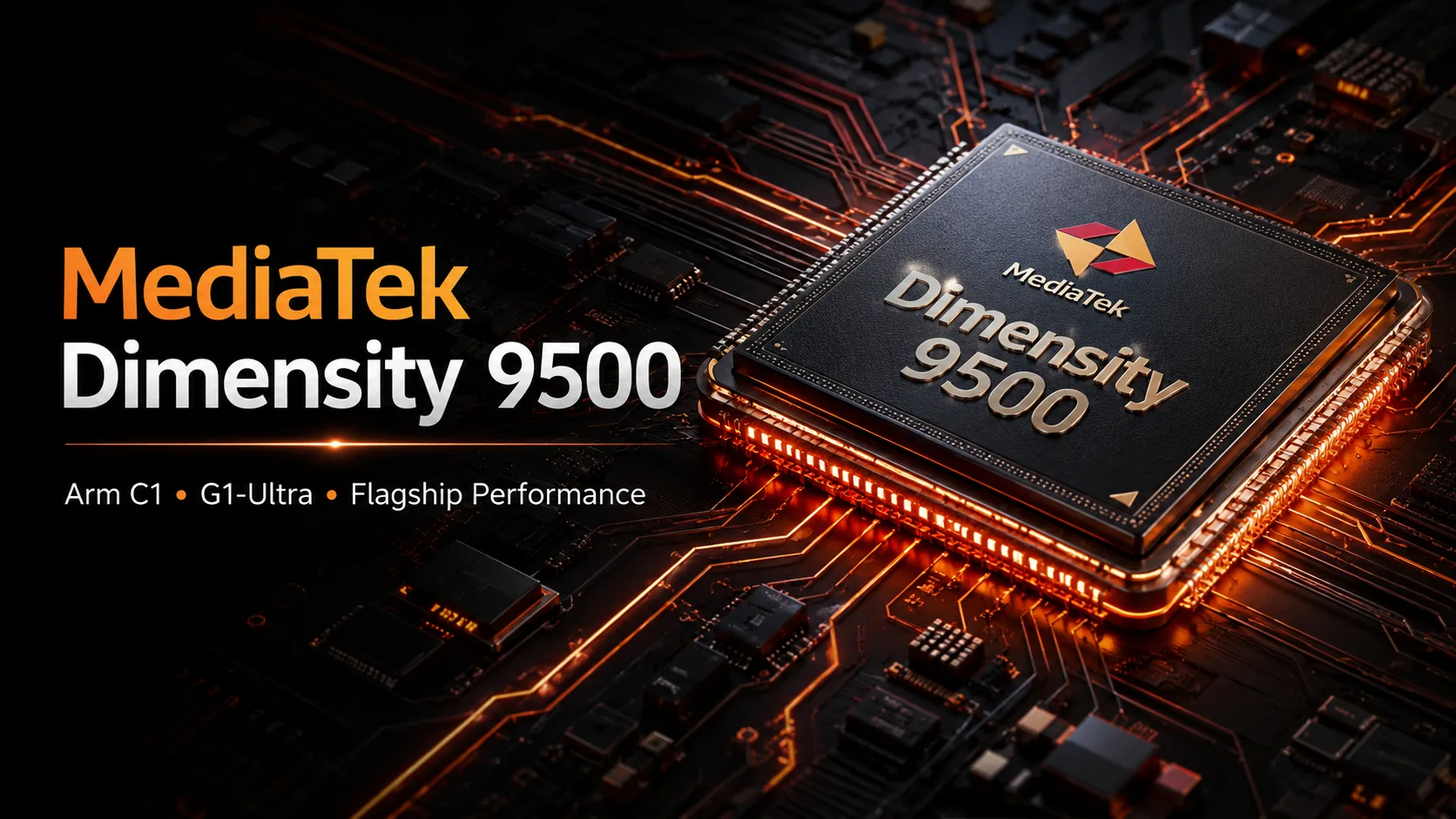
MediaTek Dimensity 9500: Arm C1, powerful G1-Ultra, and Snapdragon is already close
Dimensity 9500 is not an overclocked Dimensity 9400, but a complete architectural shift for MediaTek's flagship platform. The company has fully transitioned to the new family of Arm C1 cores, increased the L3 cache, introduced a new graphics architecture, and for the first time pushed the main core frequency above 4 GHz. In real smartphones, the chip has nearly matched Snapdragon 8 Elite Gen 5 in CPU performance, and in some graphics tests, it has proven to be faster.
MediaTek unveiled the Dimensity 9500 in September 2025. The first smartphones appeared at the end of that year, and by 2026, the platform is utilized in flagship models from Vivo, Oppo, and Xiaomi.
Complete Shift to Arm C1
Dimensity 9400 combined Cortex-X925, Cortex-X4, and Cortex-A720. In Dimensity 9500, all eight cores belong to the new Arm C1 family. MediaTek has retained the All Big Core concept: there are still no classic energy-efficient small cores.
The CPU configuration looks like this:
- 1 × C1-Ultra - up to 4.21 GHz
- 3 × C1-Premium - up to 3.5 GHz
- 4 × C1-Pro - up to 2.7 GHz
For the first time in a flagship Dimensity, the frequency of the main core exceeded 4 GHz. At the same time, the L3 cache has grown from 12 to 16 MB, while the total system cache reaches another 10 MB.
| Dimensity 9400 | Dimensity 9500 | |
|---|---|---|
| Main Core | Cortex-X925, 3.62 GHz | C1-Ultra, 4.21 GHz |
| Other Cores | 3× Cortex-X4 + 4× Cortex-A720 | 3× C1-Premium + 4× C1-Pro |
| L3 Cache | 12 MB | 16 MB |
| Graphics | Immortalis-G925 | Arm G1-Ultra |
| Storage | UFS 4.0 + MCQ | UFS 4.1, 4 lanes |
The manufacturer claims up to 32% increase in single-threaded and up to 17% in multi-threaded performance compared to the previous generation. Independent tests confirm a significant performance boost, although its extent noticeably depends on the implementation of the specific smartphone.
Performance in Real Smartphones
For a mobile SoC, one test device is not enough: power limits, firmware, and cooling significantly impact the results. Therefore, it is more illustrative to compare several production models.
| Smartphone | Geekbench 6 Single | Geekbench 6 Multi | 3DMark Wild Life Extreme |
|---|---|---|---|
| Vivo X300 Pro | 3,391 | 10,085 | 6,546 |
| Oppo Find X9 Pro | 3,511 | 10,378 | 7,167 |
| Xiaomi 17T Pro | 3,269 | 10,042 | 7,005 |
The tests were conducted by different publications and cannot be directly compared, but the variation in results allows us to see the typical level of Dimensity 9500 in production smartphones. The chip consistently holds around 10,000 points in Geekbench 6 Multi-Core, while successful implementations surpass 10.3k.
The performance increase relative to Dimensity 9400 is most apparent in two generations of Oppo flagships. The Find X8 Pro with the previous chip scored around 2,600 / 7,500 points in Geekbench 6, while the Find X9 Pro with Dimensity 9500 shows approximately 3,500 / 10,400.
In this pair of devices, the increase is around 35% in single-threaded and almost 40% in multi-threaded mode.
Snapdragon Still Slightly Faster in CPU
Snapdragon 8 Elite Gen 5 remains the main competitor to Dimensity 9500.
In the same testing methodology, Xiaomi 17 Pro Max with Snapdragon scored around 3,640 / 10,620 points in Geekbench 6, while Oppo Find X9 Pro with Dimensity 9500 scored 3,511 / 10,378.
Qualcomm maintains a slight advantage, but the gap is now measured in single-digit percentages. For MediaTek, this is a significant change: Snapdragon is no longer noticeably ahead - the difference between the flagships has shrunk to just a few percent.
G1-Ultra: Adreno No Longer Guarantees Victory
Dimensity 9500 features new graphics Arm G1-Ultra. The manufacturer claims up to 33% increase in peak performance over the previous generation and significantly higher ray tracing speeds.
Oppo Find X9 Pro scores about 7,167 points in 3DMark Wild Life Extreme, while Xiaomi 17T Pro scores around 7,005. In comparison, Xiaomi 17 Pro Max with Snapdragon 8 Elite Gen 5 scored about 6,289 points in one of the same test suites.
One 3DMark is not enough to declare G1-Ultra faster in all games, but there is no longer an automatic advantage for Adreno.
High peak speed does not guarantee that the smartphone will maintain it after 15-20 minutes of gaming.
One Dimensity 9500 - Different Results Under Prolonged Load
This is why short benchmarks poorly describe the actual gaming performance of a smartphone.
Xiaomi 17T Pro in Wild Life Extreme Stress Test maintained about 65% of its initial performance. Oppo Find X9 Pro in another test retained only about 39%.
The gap is huge, even though both smartphones use the same Dimensity 9500.
The reason lies in cooling, power consumption settings, and temperature limits of the specific device. Therefore, the same Dimensity 9500 does not necessarily mean the same gaming performance: after 15-20 minutes of load, the two smartphones can behave quite differently.
With good cooling, Dimensity 9500 can combine high speed with moderate power consumption. For example, Vivo X300 Pro in Genshin Impact can maintain around 60 frames per second with relatively moderate consumption.
Four-Lane UFS 4.1
Another important change is support for four-lane UFS 4.1.
MediaTek claims approximately double the sequential bandwidth compared to the previous implementation. In practice, some smartphones with Dimensity 9500 can indeed show over 8 GB/s in sequential read tests.
In everyday use, such an increase is less noticeable, yet high throughput is beneficial when working with large files, local AI models, and demanding applications.
NPU 990 and Local AI
Neural network computations are handled by NPU 990 with Generative AI Engine 2.0.
MediaTek claims doubled computing performance compared to the previous generation and more than doubled token generation speed. There is also a separate energy-efficient block for certain AI workloads.
Universal AI benchmarks still yield too inconsistent results to summarize the capabilities of NPU 990 with a single number. Performance heavily depends on the model, used API, and whether the specific application can leverage the hardware accelerator.
The NPU 990 is significantly stronger than its predecessor in the claimed capabilities, but its practical speed currently depends more on software support than on a single figure in a benchmark.
Conclusion
Dimensity 9500 definitively dispels the old perception of MediaTek as an alternative to Snapdragon with an inevitable compromise in performance. The switch to Arm C1 has dramatically improved CPU speed, while G1-Ultra has brought graphics to a level where there is no longer an automatic advantage for Adreno.
Snapdragon 8 Elite Gen 5 is still slightly faster in CPU tests, but the difference has shrunk to a few percent. The performance of Dimensity 9500 is already sufficient. The main question now is how much of this speed a specific smartphone will retain after prolonged load.
In a well-optimized device, Dimensity 9500 is no longer “almost Snapdragon,” but a direct competitor.
SOC Comparison
Compare Dimensity 9500 with other SOCs
Basic
GPU Specifications
Connectivity
Memory Specifications
Miscellaneous
- FLAC
- HE-AACv1
- HE-AACv2
- MP3
- H.265
- AV1
- VP9
Benchmarks
Phones with Dimensity 9500










Tablets with Dimensity 9500
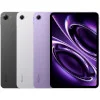
Comparison of Devices with Dimensity 9500
Compared to Other SoC
Related SoC Comparisons



Share in social media
Or Link To Us
<a href="https://cputronic.com/index.php/soc/mediatek-dimensity-9500" target="_blank">MediaTek Dimensity 9500</a>