MediaTek Dimensity 9000
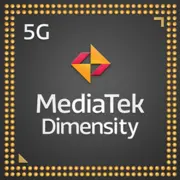
MediaTek Dimensity 9000: Power and Efficiency in a Compact Format
A professional yet friendly review of the flagship processor for smartphones
Introduction
The MediaTek Dimensity 9000 is the company’s ambitious answer to the demands of the high-performance mobile devices market. Released in late 2021, this chipset quickly captured attention thanks to its cutting-edge manufacturing process, robust architecture, and energy efficiency. In this article, we will explore what sets the Dimensity 9000 apart from its competitors, how it performs in real-world scenarios, and who should pay attention to it.
Architecture and Manufacturing Process: 4 nm and a Performance Breakthrough
CPU: 8 cores and an advanced layout
The Dimensity 9000 is built on a heterogeneous architecture consisting of 8 cores, divided into three clusters:
- 1× Cortex-X2 at 3.05 GHz-for resource-intensive tasks (gaming, rendering).
- 3× Cortex-A710 at 2.85 GHz-a balance between performance and energy consumption.
- 4× Cortex-A510 at 1.8 GHz-for background processes and basic applications.
A 1 MB L2 cache and an 8 MB shared L3 cache enhance data processing by reducing latency. The 4 nm process (TSMC N4) ensures a high transistor density and lowers heat generation.
GPU: Mali-G710 MP10 - next-level graphics
The Mali-G710 MP10 GPU supports:
- Ray Tracing (hardware-accelerated ray tracing).
- Frequencies up to 850 MHz.
- Displays with a 180 Hz refresh rate (at FHD+ resolution).
This makes the Dimensity 9000 one of the first mobile chips to support technologies previously available only in PCs.
Real-World Performance
Gaming: Smoothness and Detail
- Genshin Impact: stable 60 FPS at high settings (with active cooling in the smartphone).
- PUBG Mobile: HDR graphics support and 90 FPS.
- "Super Resolution" Mode: AI algorithms enhance image detail without stressing the GPU.
Note: Due to its 4W TDP, long gaming sessions may cause heating; thus, smartphones with this chip often come equipped with liquid cooling systems.
Multimedia and AI
- 8K@30fps video encoding and 8K@60fps decoding.
- The MediaTek APU 590 AI block accelerates tasks in applications: object recognition in the camera, automatic photo retouching, battery charge optimization.
- Power consumption: in everyday scenarios (social media, streaming video) the processor consumes 15-20% less energy than the Snapdragon 888.
Integrated Modules: Future Connectivity
Modem and 5G
- The MediaTek M80 modem supports 5G SA/NSA in Sub-6 GHz bands.
- Download speeds of up to 7 Gbps and upload speeds of up to 3.7 Gbps.
- Compatibility with 4G LTE Cat.24 (speeds up to 2.5 Gbps).
Wi-Fi, Bluetooth, and Satellites
- Wi-Fi 6E supporting three bands (2.4/5/6 GHz).
- Bluetooth 5.3 with enhanced audio quality (LE Audio).
- Global navigation: GPS, GLONASS, Galileo, BeiDou, QZSS.
Comparison with Competitors
Dimensity 9000 vs Snapdragon 8 Gen 1
- Manufacturing process: 4 nm TSMC for MediaTek vs. 4 nm Samsung for Snapdragon - an advantage in energy efficiency.
- Graphics: Mali-G710 MP10 vs Adreno 730. In 3DMark Wild Life tests, Snapdragon leads by 10-15%, but Dimensity runs cooler.
- AnTuTu 10: 1.1 million points vs 1.05 million for Snapdragon 8 Gen 1.
Dimensity 9000 vs Apple A15 Bionic
- Single-threaded performance: A15 leads (Geekbench 6 Single Core - ~2000), but in multi-threaded tasks, Dimensity shows comparable results.
- Power consumption: A15 is more efficient but only works within the iOS ecosystem.
Use Cases
Gaming
Smartphones powered by Dimensity 9000 (e.g., Vivo X80 Pro) are well-suited for mobile gamers but require models with advanced cooling.
Photography and Video
- Supports cameras up to 320 MP (Samsung ISOCELL sensors).
- 8K HDR video with real-time noise reduction.
- AI stabilization for filming in motion.
Everyday Tasks
Fast multitasking, a smooth interface, and long battery life (in devices with a capacity of 4500 mAh).
Pros and Cons
Strengths
- High performance in gaming and multimedia.
- Support for modern communication standards.
- Energy efficiency thanks to the 4 nm manufacturing process.
Weaknesses
- Lack of support for mmWave 5G (only relevant for the USA).
- GPU slightly lags behind top solutions from Qualcomm.
Practical Tips for Choosing a Smartphone
1. Cooling: look for models with vapor chambers or graphite thermal pads.
2. Battery: ideally, 5000 mAh with support for fast charging from 65W.
3. Display: AMOLED with a 120 Hz refresh rate to maximize GPU capabilities.
4. Camera: devices with Sony IMX766 or Samsung GN5 sensors will better utilize the chip's potential.
Typical devices: flagship models in the mid-price range (Xiaomi, Vivo, Oppo) and premium models.
Final Verdict: Who Is the Dimensity 9000 Suitable For?
This processor is an ideal choice for:
- Gamers who value a balance between performance and price.
- Photography enthusiasts looking for advanced photo and video processing.
- Users seeking flagship performance without overpaying for a brand.
Key benefits:
- Future-proofing (5G, Wi-Fi 6E, 8K).
- Long battery life thanks to an optimized manufacturing process.
- Versatility for any use case.
The MediaTek Dimensity 9000 proves that flagship technology can be accessible. It is not just a processor but a foundation for smartphones that don't yield to top models while offering a better price-to-performance ratio.
SOC Comparison
Compare Dimensity 9000 with other SOCs
Basic
3x 2.85 GHz – Cortex-A710
4x 1.8 GHz – Cortex-A510
GPU Specifications
Connectivity
Memory Specifications
Miscellaneous
Benchmarks
Phones with Dimensity 9000






Tablets with Dimensity 9000
Comparison of Devices with Dimensity 9000
Compared to Other SoC
Related SoC Comparisons



Share in social media
Or Link To Us
<a href="https://cputronic.com/index.php/soc/mediatek-dimensity-9000" target="_blank">MediaTek Dimensity 9000</a>