Qualcomm Snapdragon 732G

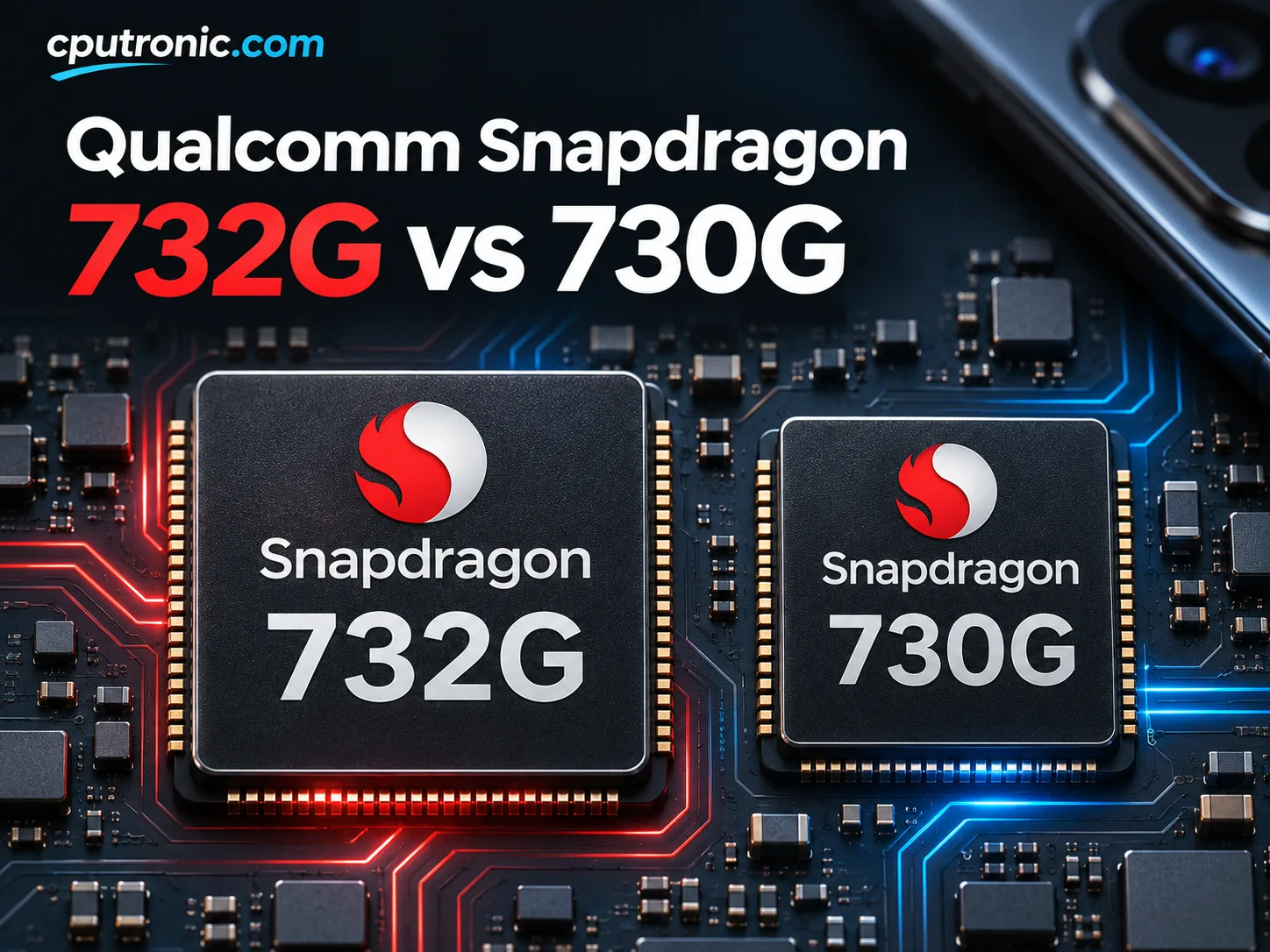
How Much Faster Is Snapdragon 732G Than 730G in Benchmarks?
Qualcomm introduced Snapdragon 732G in August 2020 as an updated version of the 730G. In the 3DMark Wild Life graphics test, three smartphones powered by the 732G scored 13-14% higher than the Xiaomi Mi Note 10 Lite with the 730G. In the single-core Geekbench 6 test, the lead was around 5%.
Results from Five Smartphones
The POCO X3 NFC, Redmi Note 10 Pro, and Xiaomi Mi 11 Lite allow a comparison of the same chip across three smartphones. The table also includes the Mi Note 10 Lite with the 730G and the Mi 11 Lite 5G with the 780G. Firmware and memory configuration affect the results of individual runs.
| Smartphone | Chip | AnTuTu 10 | Geekbench 6, single-core / multi-core | 3DMark Wild Life |
|---|---|---|---|---|
| Xiaomi Mi Note 10 Lite | Snapdragon 730G | 376 385 | 687 / 1 823 | 983 |
| POCO X3 NFC | Snapdragon 732G | 395 451 | 722 / 1 878 | 1 108 |
| Redmi Note 10 Pro (4G) | Snapdragon 732G | 398 090 | 724 / 1 882 | 1 116 |
| Xiaomi Mi 11 Lite (4G) | Snapdragon 732G | 407 741 | 721 / 1 875 | 1 110 |
| Xiaomi Mi 11 Lite 5G | Snapdragon 780G | 633 483 | 999 / 2 616 | 3 126 |
The Snapdragon 732G and 730G use the same 8 nm process and have eight Kryo 470 cores. Two performance cores are based on Cortex-A76, while six efficiency cores are based on Cortex-A55. Qualcomm raised the maximum CPU frequency from 2.2 to 2.3 GHz. For the Adreno 618 graphics processor, the company claimed up to a 15% increase in rendering performance.
Among the models with the 732G, the Mi 11 Lite 4G scored highest in AnTuTu 10. In Geekbench 6 and 3DMark Wild Life, the results of the three smartphones differ by less than 1%. The gap between the two Mi 11 Lite versions is much larger. The 5G model features the Snapdragon 780G with Adreno 642 graphics and scores 2.8 times higher in Wild Life than the 4G version.
Gaming on the Redmi Note 10 Pro with a 120 Hz Display
In tests conducted in 2021, lowering the graphics settings added almost 10 FPS in PUBG Mobile and made practically no difference in Asphalt 9. Of the three games, Armajet delivered the highest frame rate.
- PUBG Mobile - an average of 29.8 FPS at HD settings and 39.7 FPS on Smooth.
- Asphalt 9: Legends - an average of 29.6 FPS at high settings and 29.5 FPS at low settings.
- Armajet - an average of 65.7 FPS, reaching up to 90 FPS in individual scenes.
In the 3DMark Wild Life stress test, the Redmi Note 10 Pro scored between 1,111 and 1,117 points per run. Stability was 99.5%.
Camera and Connectivity
The Spectra 350 image processor supports photography at resolutions of up to 192 MP. When shooting with a single camera, the limit drops to 36 MP if multi-frame noise reduction and zero-shutter-lag mode are enabled simultaneously.
The global version of the Redmi Note 10 Pro has a 108 MP main camera that, in its standard mode, combines nine pixels into one and saves 12 MP images. It records video in 4K at 30 FPS or 1080p at 60 FPS. Cellular connectivity is limited to 4G LTE-the Snapdragon 732G has an integrated X15 LTE modem.
Conclusion
Switching from the 730G to the 732G provides a small increase in CPU performance. The difference is more noticeable in graphics, but replacing a working smartphone with a 730G solely for this improvement makes little sense.
When choosing a used device with the 732G, the condition of the battery and display matters more. The POCO X3 NFC has a 120 Hz IPS panel, while the Redmi Note 10 Pro has a 120 Hz AMOLED display and a 108 MP main camera. The Mi 11 Lite 4G is suitable for those who need a lightweight smartphone: it weighs 157 g and has a 90 Hz AMOLED display. If both Mi 11 Lite versions are comparable in price and condition, the Mi 11 Lite 5G with Snapdragon 780G is preferable for gaming.
SOC Comparison
Compare Snapdragon 732G with other SOCs
Basic
6x 1.8 GHz – Kryo 470 Silver (Cortex-A55)
GPU Specifications
Connectivity
Memory Specifications
Miscellaneous
Benchmarks
Compared to Other SoC
Related SoC Comparisons



Share in social media
Or Link To Us
<a href="https://cputronic.com/soc/qualcomm-snapdragon-732g" target="_blank">Qualcomm Snapdragon 732G</a>