Qualcomm Snapdragon 680

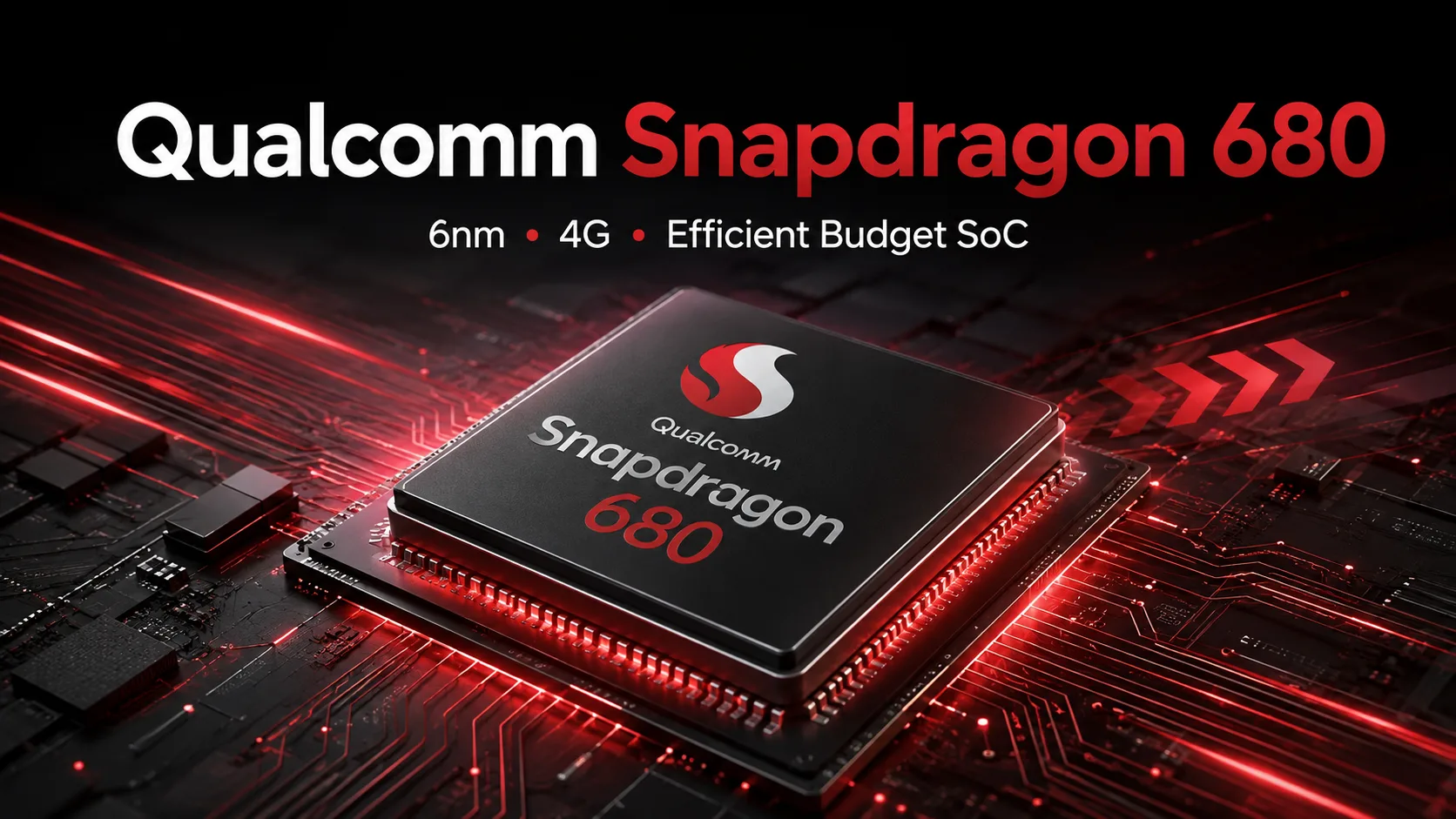
Qualcomm Snapdragon 680: Tests, Performance, and Smartphones Using the Popular 4G Chip
Qualcomm Snapdragon 680 is a budget mobile platform that has been used in Xiaomi Redmi Note 11, Redmi 10C, Samsung Galaxy A23, and many other affordable smartphones. Thanks to its 6nm manufacturing process, the chip boasts moderate power consumption, but its performance is already at an entry-level standard.
For messengers, video, navigation, and banking applications, the Snapdragon 680 remains suitable. However, weak graphics, lack of 5G, and relatively low processing core speeds limit its performance reserves and the longevity of such smartphones.
Results of Smartphones with Snapdragon 680
| Smartphone | Geekbench 6, single core | Geekbench 6, all cores | 3DMark Wild Life | PCMark Work 3.0 |
|---|---|---|---|---|
| Xiaomi Redmi Note 11 | 416 | 1462 | 441 | 7450 |
| Xiaomi Redmi 10C | 419 | 1290 | 441 | 6797 |
| Samsung Galaxy A23 | 439 | 1407 | 440 | 7458 |
The table presents aggregated results from user databases of Geekbench and UL Solutions. This is not a direct comparison of smartphones under identical conditions: results are influenced by the system version, firmware, memory size, background processes, and the condition of the specific device.
The spread of Geekbench results is minor. This is expected since all three smartphones use the same processor, and differences in cooling and power settings for the Snapdragon 680 rarely lead to significant variations in speed.
CPU Performance
Scores of about 400-440 points in the single-core Geekbench 6 test are modest by today's standards. The Snapdragon 680 handles simple applications well but opens heavy websites more slowly, launches large programs, and switches between resource-intensive tasks with delay.
Multi-core scores are around 1300-1460 points. Eight cores help with the background operation of several applications, but the platform does not have a significant performance reserve. Increased RAM allows for less frequent unloading of programs but does not speed up the processor itself.
When choosing a specific smartphone with the Snapdragon 680, it is more important to look at the amount of RAM, type of storage, and firmware quality. The difference between devices with the same chip is usually less impactful than the variance between models with fast UFS storage and slower eMMC.
Graphics and Gaming
Adreno 610 is the main limitation of the Snapdragon 680. The smartphones in the table achieve around 440 points in the 3DMark Wild Life benchmark, corresponding to entry-level mobile graphics.
Simple games and older titles run without serious issues. In demanding games, it is necessary to lower graphics quality and cope with unstable frame rates. The Snapdragon 680 is already too weak for modern demanding projects, emulators, and lengthy gaming sessions.
Support for 90 Hz displays does not mean the smartphone can output 90 frames per second in games. The increased refresh rate makes scrolling the interface visually smoother but does not eliminate delays when launching applications and loading heavy pages.
Everyday Use
PCMark Work 3.0 evaluates the performance of browsers, word processing, photo, video, and data handling. This is a general system performance test, so its results depend not only on the processor but also on the storage, memory, and software.
The Redmi 10C scores 6797 points, while the Redmi Note 11 and Galaxy A23 score around 7450 points. This discrepancy confirms that having the same chip does not guarantee the same performance in the finished devices.
The most noticeable delays occur during application updates, photo processing, and actively switching between several heavy applications. For simpler scenarios, the Snapdragon 680's performance is still sufficient, although quick responsiveness should not be expected.
Power Consumption and Heating
Energy efficiency is the main advantage of the Snapdragon 680. The platform typically does not require complex cooling and rarely overheats during video playback, browser use, or navigation.
Most smartphones powered by this chip are equipped with batteries of around 5000 mAh, allowing them to operate for a long time under moderate loads. However, actual battery life depends on the display, firmware, mobile signal quality, and background applications.
Under prolonged gaming loads, performance may drop, but this is not the main issue for the Snapdragon 680. Even without significant throttling, the processor and graphics capabilities are insufficient for demanding modern games.
Cameras and Multimedia
The Snapdragon 680 supports multiple camera setups; however, its video recording capabilities are limited to 1080p resolution. Smartphones using this platform cannot record video in 4K.
Photo quality primarily depends on the sensor, optics, and the manufacturer's algorithms. Therefore, the Redmi 10C and Redmi Note 11, despite having the same processor, vary significantly in camera capabilities.
The lack of 4K recording is particularly important for users who frequently shoot videos. For photos and short clips on social media, the platform's capabilities are adequate, but there is no significant headroom for image processing.
Should You Buy a Smartphone with Snapdragon 680?
A smartphone with Snapdragon 680 makes sense only when priced low. It is advisable to choose a configuration with at least 6 GB of RAM and UFS storage: this will not make the processor faster, but it will reduce delays when launching and switching applications.
The Snapdragon 685 is only slightly faster and remains a closely related 4G solution. More noticeable performance gains come from smartphones with Helio G99, while models with Dimensity 6300 additionally support 5G. At comparable prices, these platforms are preferable.
Snapdragon 680 is an economical but already slow budget chip. It is suitable for basic tasks; however, weak graphics, lack of 5G, and video recording limitations to 1080p make it a justified choice only in the cheapest smartphones.
SOC Comparison
Compare Snapdragon 680 with other SOCs
Basic
4x 1.9 GHz – Kryo 265 Silver (Cortex-A53)
GPU Specifications
Connectivity
Memory Specifications
Miscellaneous
Benchmarks
Compared to Other SoC
Related SoC Comparisons


Share in social media
Or Link To Us
<a href="https://cputronic.com/soc/qualcomm-snapdragon-680" target="_blank">Qualcomm Snapdragon 680</a>