MediaTek Dimensity 7300
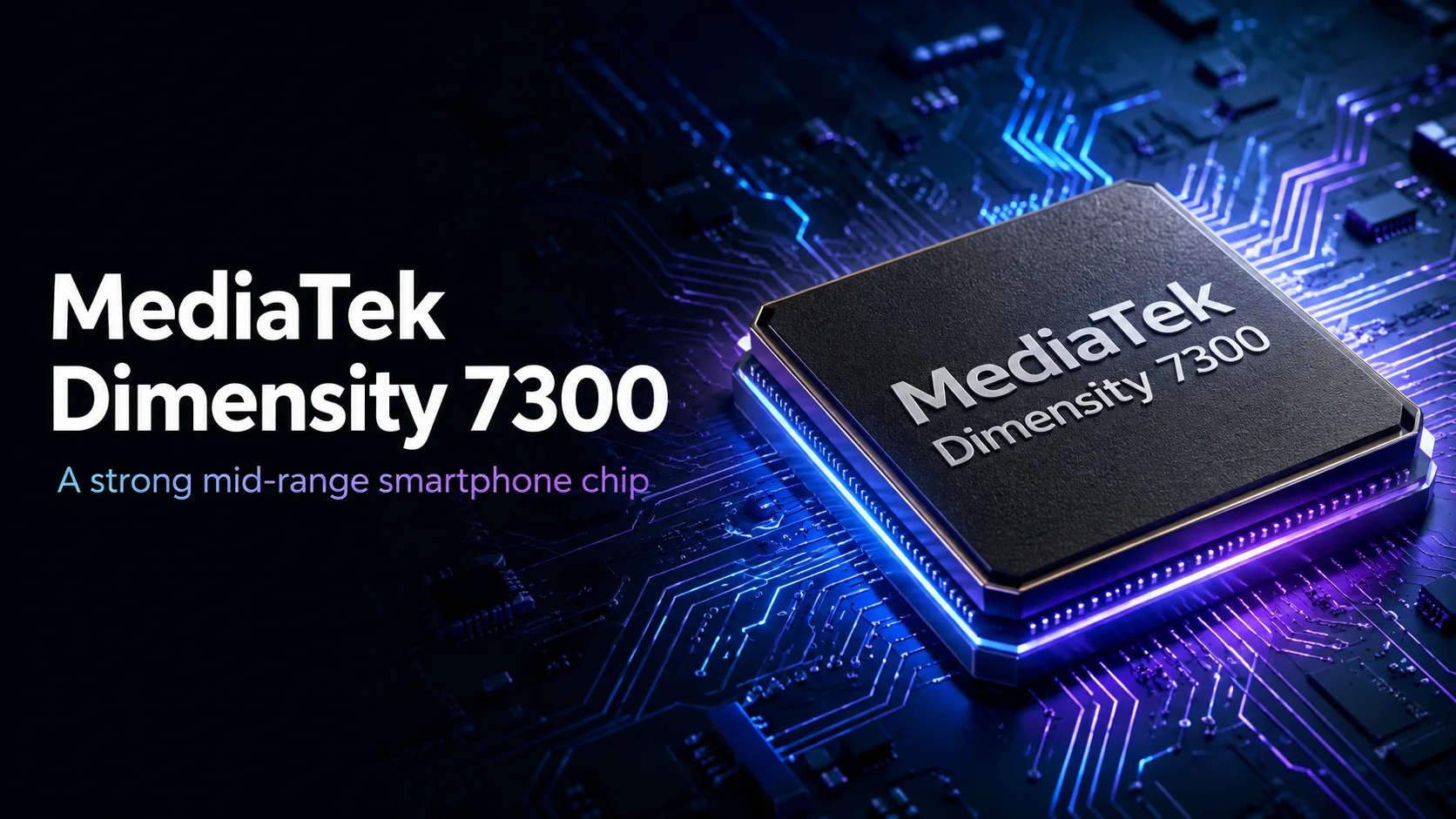
MediaTek Dimensity 7300: Why This Platform Lasted Longer Than One Generation
MediaTek Dimensity 7300 has become one of the company's most successful processors for mid-range smartphones. It did not utilize the latest Arm cores but offered a rare configuration of four high-performance Cortex-A78 cores, a modern 4nm process node, and sufficiently fast graphics. As a result, the chip appeared in both the budget CMF Phone 1 and in more expensive Motorola smartphones and foldable models.
Later, MediaTek released the Dimensity 7400 with the same architecture and slightly higher clock speeds. This best demonstrates the headroom of the original platform: the Dimensity 7300 did not become outdated after one model cycle and did not require a full replacement.
What Changed Compared to Dimensity 7050
The Dimensity 7300 was not a cosmetic update but a significant redesign of the previous platform. MediaTek transitioned from a 6nm to a 4nm process node, doubled the number of performance cores, and replaced the graphics and neural processing units.
| Characteristic | Dimensity 7300 | Dimensity 7050 |
|---|---|---|
| Performance cores | 4 × Cortex-A78, up to 2.5 GHz | 2 × Cortex-A78, up to 2.6 GHz |
| Efficiency cores | 4 × Cortex-A55 | 6 × Cortex-A55 |
| Process Technology | 4nm | 6nm |
| Graphics | Mali-G615 MC2 | Mali-G68 MC4 |
| Neural Processing Unit | NPU 655 | NPU 550 |
| Maximum Display Refresh Rate | Full HD+ up to 144 Hz | Full HD+ up to 120 Hz |
| Maximum 5G Speed | 3.27 Gbit/s | lower |
| Bluetooth | 5.4 | 5.2 |
Although the maximum frequency of Cortex-A78 decreased from 2.6 to 2.5 GHz, the number of performance cores increased from two to four. This significantly boosted multi-threaded performance and helped the processor better handle app installations, photo processing, and active multitasking.
MediaTek also claimed a reduction in power consumption of performance cores by up to 25% compared to the Dimensity 7050 and a twofold performance improvement in the neural processing unit. Unlike the Dimensity 7400, which built upon an already established formula, the Dimensity 7300 was indeed a transition to a new platform.
Performance in Specific Smartphones
The performance of a single processor can vary due to storage, RAM, cooling, and firmware settings. Therefore, the following table shows the behavior of specific devices rather than SoC results under completely identical conditions.
| Smartphone | Chip Version | AnTuTu | Geekbench 6 Single-Core | Geekbench 6 Multi-Core |
|---|---|---|---|---|
| CMF Phone 1 | Dimensity 7300 | 642 187 | 1 015 | 2 867 |
| Lava Agni 3 | Dimensity 7300X | 676 483 | 1 041 | 3 239 |
| Motorola Razr 50 | Dimensity 7300X | 619 345 | 1 051 | 3 032 |
The Dimensity 7300X differs by supporting two displays for foldable devices but shares the same CPU and GPU configuration as the standard Dimensity 7300.
The single-core results fall within a narrow range of 1015-1051 points. In multi-core mode, the spread is larger - from 2867 points for the CMF Phone 1 to 3239 for the Lava Agni 3. The overall AnTuTu score is also influenced by storage: for example, the CMF Phone 1 uses UFS 2.2, even though the platform supports UFS 3.1.
Stability under prolonged load varies even more. The Lava Agni 3 maintains about 75% of its peak performance, while the Motorola Razr 50 holds approximately 62%. The thin foldable body limits cooling, so the same processor does not guarantee the same speed after a few minutes of heavy load.
Closest Competitor - Snapdragon 7s Gen 2
In terms of architecture and positioning, the direct competitor to the Dimensity 7300 is the Snapdragon 7s Gen 2. Qualcomm uses a similar configuration of four Cortex-A78 and four Cortex-A55, a 4nm process node, and Adreno 710 graphics. The maximum frequencies are also close: 2.5 GHz for MediaTek and 2.4 GHz for Qualcomm.
For comparison, we can take the Lava Agni 3 with Dimensity 7300X and Motorola Edge 60 Stylus with Snapdragon 7s Gen 2. The former initially cost around $250, while the latter was priced at approximately $265. At the same time, Motorola offered 256 GB of storage, while the base version of Lava had 128 GB.
This comparison involves specific smartphones, not a lab test of the two processors under identical conditions.
| Test | Lava Agni 3 | Motorola Edge 60 Stylus | Difference Between Devices |
|---|---|---|---|
| AnTuTu | 676 483 | 668 917 | Lava faster by 1% |
| Geekbench 6 Single-Core | 1 041 | 1 021 | Lava faster by 2% |
| Geekbench 6 Multi-Core | 3 239 | 2 915 | Lava faster by 11% |
The Dimensity 7300 is capable of competing on equal terms with the Snapdragon 7s Gen 2. Qualcomm does not have a significant advantage in this generation, and in multi-core loads, a device powered by MediaTek can turn out to be faster.
The main advantage of the platform manifested in the fact that performance at this level appeared not only in smartphones priced at $250-300 but also in noticeably cheaper models.
Why Dimensity 7300 Looked Particularly Good in Budget Smartphones
The most illustrative example is the CMF Phone 1. Its base version was priced at around $190, while the Moto G85 with Snapdragon 6s Gen 3 was priced at approximately $215.
Both devices belong to a similar price segment but use processors of different levels.
| Test | CMF Phone 1 | Moto G85 | CMF Advantage |
|---|---|---|---|
| Processor | Dimensity 7300 | Snapdragon 6s Gen 3 | - |
| AnTuTu | 642 187 | 471 687 | 36% |
| Geekbench 6 Single-Core | 1 015 | 926 | 10% |
| Geekbench 6 Multi-Core | 2 867 | 2 145 | 34% |
Here, the Dimensity 7300 is not just competing with Qualcomm but significantly outpacing the lower-tier Snapdragon platform. The CMF Phone 1 was cheaper but offered about a third higher overall and multi-core performance.
Of course, processor speed is not the only criterion for choosing a smartphone. The Moto G85 offered a more developed camera, stereo speakers, and a curved pOLED screen. However, in terms of raw performance, the Dimensity 7300 provided customers with significantly more for less money.
This became the main advantage of the platform: Snapdragon 7s Gen 2-level performance was successfully brought down to the smartphone segment priced around $200.
Gaming: Fast Enough, But Without a Big Margin
Graphics are handled by the Mali-G615 MC2. It is more modern than the Mali-G68 MC4 from the Dimensity 7050, but the configuration with two graphics cores limits the processor's performance in demanding games.
In BGMI, smartphones powered by Dimensity 7300 can achieve around 35-40 FPS at higher settings. In Call of Duty: Mobile, the result can exceed 50 FPS. For a mid-range device, this is an acceptable level, but to achieve stable 60 or 90 frames in demanding projects, settings will need to be lowered.
The main limitation remains the graphics. Four performance cores are enough for most games, but the Mali-G615 MC2 quickly reaches its limits. Thus, a smartphone on Dimensity 7300 can be fast in the interface and processor tests while not transforming into a fully-fledged gaming model.
Cameras, Display, and Connectivity
The Dimensity 7300 supports cameras up to 200 MP and 4K HDR recording at 30 frames per second. However, the final quality of the images depends primarily on the sensor, optics, and algorithms of the smartphone manufacturer.
The platform works with Full HD+ screens up to 144 Hz or WFHD+ screens up to 120 Hz. Hardware decoding is provided for H.264, HEVC, and VP9, but AV1 support is not officially stated.
The modem supports 5G Sub-6 GHz with download speeds of up to 3.27 Gbit/s. It also provides Wi-Fi 6E, Bluetooth 5.4, dual 5G SIM, and VoNR.
The capabilities of the platform do not guarantee their presence in every smartphone. The manufacturer may install UFS 2.2 instead of UFS 3.1 or omit Wi-Fi 6E to lower the cost of the device.
Conclusion
The Dimensity 7300 proved successful not due to the latest architecture but due to a smart combination of proven cores, a 4nm process node, and four performance Cortex-A78 cores. Against the backdrop of the Snapdragon 7s Gen 2, it appeared at least competitive, while in budget smartphones, it offered significantly more power than Qualcomm's lower-tier platforms.
The main limitation remained the Mali-G615 MC2. The processor part still had headroom, while the graphics already required settings to be lowered in demanding games. For the interface, multitasking, and everyday applications, however, the performance was more than sufficient.
Thus, the Dimensity 7400 was not a fix for a weak chip but an extension of the life of a successful platform. MediaTek raised the clock speeds and left the architecture nearly unchanged because the Dimensity 7300 still met the requirements of the mid-range market.
SOC Comparison
Compare Dimensity 7300 with other SOCs
Basic
GPU Specifications
Connectivity
Memory Specifications
Miscellaneous
Benchmarks
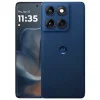
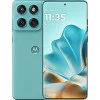
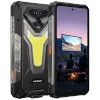
Phones with Dimensity 7300







Tablets with Dimensity 7300
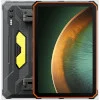
Comparison of Devices with Dimensity 7300
Compared to Other SoC
Related SoC Comparisons


Share in social media
Or Link To Us
<a href="https://cputronic.com/en/soc/mediatek-dimensity-7300" target="_blank">MediaTek Dimensity 7300</a>