Intel Arc G3

Intel Arc G3
Intel Arc G3 프로세서 리뷰

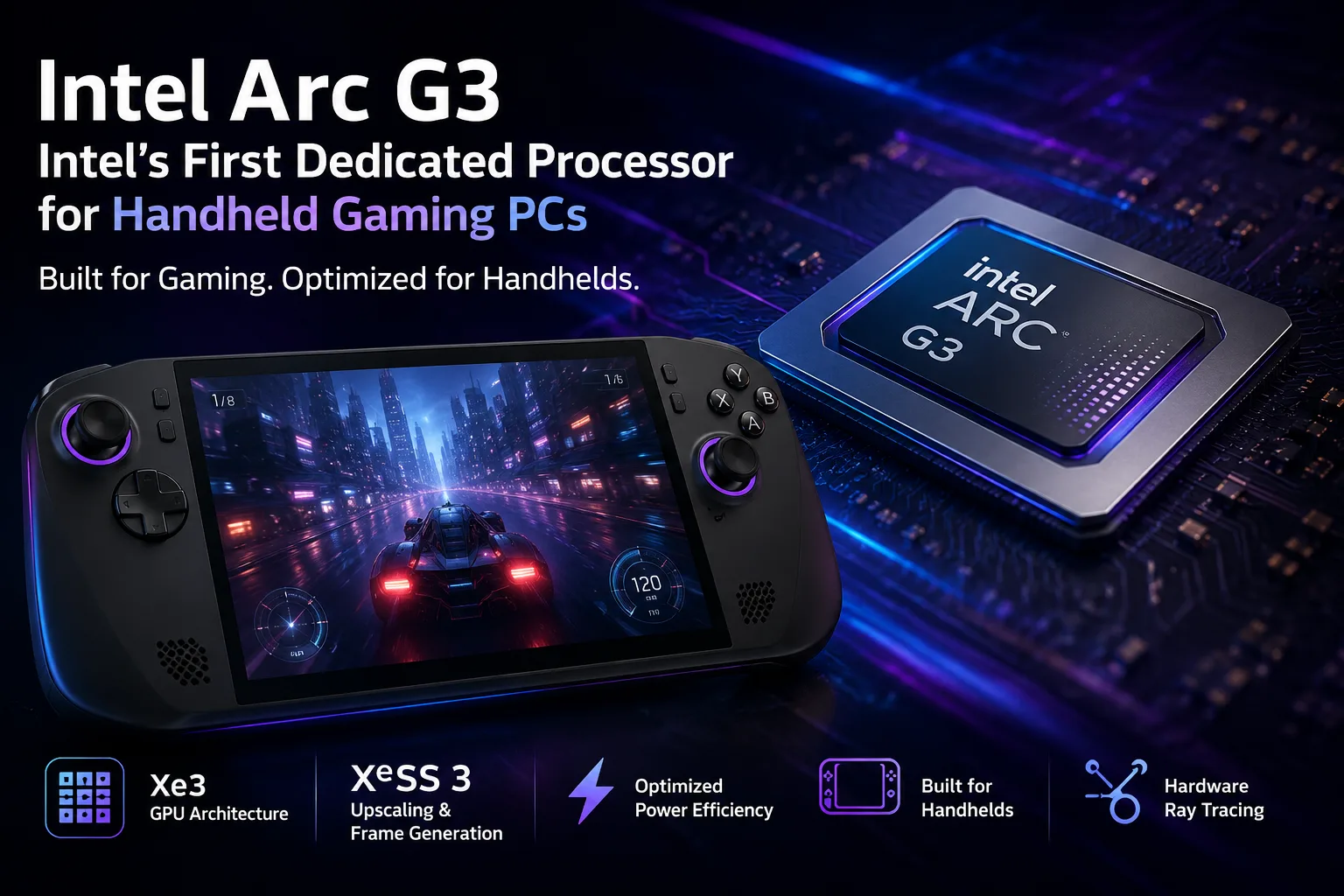
Intel Arc G3: 인텔의 첫 번째 휴대용 게임 PC 전용 프로세서

AMD는 이미 몇 세대에 걸쳐 휴대용 게임 PC용 특별 프로세서인 Ryzen Z를 출시해왔습니다. Arc G3의 등장 전까지 이러한 장치의 제조업체들은 일반 노트북 프로세서인 Intel Core Ultra를 사용해왔습니다. 새로운 시리즈는 접근 방식을 변경하며, 핵 구성, 그래픽 및 전력 관리는 처음부터 게임용 휴대용 포맷에 맞춰 설계되었습니다.

인텔은 두 개의 고성능 P-코어와 여덟 개의 E-코어, 그리고 네 개의 저전력 LP E-코어를 남겼습니다. 이러한 구조는 CPU의 전체 전력 한계에 대한 부담을 줄이고, 내장 그래픽에 더 큰 비중을 두도록 합니다.

이 시리즈에는 기본 Arc G3와 그래픽이 Arc B370인 모델과 상위 모델인 Arc G3 Extreme과 Arc B390이 포함됩니다. 포지셔닝에 따라 이들은 각각 AMD Ryzen Z2 및 Ryzen Z2 Extreme과 경쟁해야 합니다. 그러나 독립적인 테스트는 지금까지 주로 Extreme 버전에 대해 발표되었습니다.

Arc G3와 G3 Extreme의 차이점

특성 Intel Arc G3 Intel Arc G3 Extreme
최대 CPU 주파수 4.6 GHz 4.7 GHz
내장 그래픽 Intel Arc B370 Intel Arc B390
Xe3 코어 10 12
최대 GPU 주파수 2.2 GHz 2.3 GHz

CPU 구성, 캐시 용량 및 기본 전력은 두 프로세서 모두 동일합니다. 주요 차이는 그래픽에 있으며, 기본 G3는 Xe-코어가 16.7% 적고 최대 GPU 주파수가 약간 낮습니다.

이것이 게임에서의 성능 저하를 의미하지는 않습니다. 실제 차이는 전력 한계, 메모리 속도, 냉각 및 특정 장치의 설정에 따라 달라질 수 있습니다.

게임 프로세서에 P-코어가 단 두 개인 이유

Arc G3의 총 코어 수는 인상적으로 보입니다 - 14코어 14스레드. 하지만 성능 클래스에 해당하는 코어는 두 개뿐입니다. 나머지는 백그라운드 프로세스, 멀티스레드 작업 및 낮은 하중에서의 경제적인 작업을 위해 설계되었습니다.

렌더링, 컴파일 및 기타 CPU 부하가 큰 작업에 대해서는 이러한 구성은 4개 또는 6개의 P-코어를 가진 프로세서에 뒤쳐질 수 있습니다. 그러나 휴대용 게임 PC에서는 우선 순위가 다릅니다: CPU와 GPU는 공통 전력 한계를 공유하며, 최종 프레임 속도는 자주 그래픽에서 제한됩니다.

인텔은 이러한 접근 방식을 'right-sized compute'라고 부릅니다. 프로세서 부분은 게임에 충분히 빠르지만, 배터리로 작동하는 장치에는 과도하지 않아야 합니다.

Xe3 그래픽 및 XeSS 3

Arc G3에서 주된 초점은 Xe3 세대 내장 그래픽에 맞춰져 있습니다. 기본 Arc B370은 10개의 Xe 코어를 가지며, Arc B390 Extreme 버전은 12개를 가집니다. 두 가지 모두 DirectX 12 Ultimate와 하드웨어 레이 트레이싱을 지원합니다.

성능은 XeSS 3 기술에 의해 보완됩니다. 이 기술은 이미지 스케일링, 중간 프레임 생성 및 지연 감소를 포함합니다. 휴대용 PC에서 이는 특히 중요한데, 무거운 게임에서 내장 그래픽은 종종 수용 가능한 프레임 속도를 유지하기 위해 더 낮은 내부 해상도로 이미지를 출력해야 하기 때문입니다.

하지만 프레임 생성이 기본 성능을 대체하지는 않습니다. 게임이 원래 느리게 작동하는 경우 FPS 수치는 증가할 수 있지만, 입력 지연과 아티팩트는 여전히 눈에 띄게 남아있습니다. 따라서 Arc G3는 프레임 생성을 사용하지 않은 결과로 평가하는 것이 더 적절합니다.

벤치마크: 현재는 Arc G3 Extreme만 존재

기본 Intel Arc G3에 대한 완전한 독립 테스트는 아직 부족합니다. 첫 번째로 상세한 결과가 발표된 장치는 Arc G3 Extreme의 MSI Claw 8 EX AI+입니다.

비교를 위해 아래에 AMD Ryzen AI Z2 Extreme을 탑재한 ASUS ROG Xbox Ally X의 결과를 제시합니다. 모든 결과는 동일한 사양에서 얻어졌지만, 표에 정확한 전력 모드는 공개되지 않았습니다. 따라서 비교는 설치된 프로세서뿐만 아니라 준비된 장치 전체를 특징짓습니다.

장치 프로세서 Fire Strike Time Spy Steel Nomad Port Royal
MSI Claw 8 EX AI+ Intel Arc G3 Extreme 12,358 6,534 1,425 3,544
ASUS ROG Xbox Ally X AMD Ryzen AI Z2 Extreme 9,141 4,033 609 1,999

MSI Claw는 모든 네 가지 테스트에서 ASUS ROG Xbox Ally X보다 더 빠른 성능을 보였습니다. 차이의 일부는 프로세서뿐만 아니라 장치의 전력 설정, 메모리 및 냉각과도 관련이 있을 수 있습니다.

가장 큰 차이는 Steel Nomad와 Port Royal에서 관찰되었습니다. 후자는 레이 트레이싱 테스트로 특히 흥미롭지만, 결과는 여전히 Arc B390과 AMD 그래픽을 순수 비교했다고 볼 수는 없습니다.

게임 테스트에서 MSI Claw는 1080p 및 중간 설정에서 XeSS 없이 Black Myth: Wukong에서 34 FPS를 기록했습니다. 스케일링을 활성화한 후, 이 숫자는 56 FPS로 증가했습니다. Cyberpunk 2077에서는 1080p 및 높은 설정에서 XeSS 없이 36.2 FPS, 스케일링을 사용했을 때 51.1 FPS를 기록했습니다.

이 수치는 일반 Arc G3에 직접적으로 대응할 수 없습니다. 하위 버전은 그래픽 블록 수가 적고 최대 GPU 주파수가 낮기 때문입니다. 실제 게임에서의 차이가 얼마나 클지는 Arc B370이 탑재된 장치의 테스트만이 보여줄 수 있을 것입니다.

제한된 전력에서의 성능

Arc G3에서 중요하게 여겨야 할 것은 피크 성능이 아닌 15-25 W의 전력에서의 성능입니다. 이 범위에서 휴대용 장치는 FPS, 발열, 소음 및 배터리 수명 간의 균형을 맞춰야 합니다.

현재 기본 G3와 Ryzen Z2가 동일한 전력 한계에서 비교 가능한 테스트는 없습니다. 따라서 하위 모델의 효율성과 AMD 대비 위치를 평가할 수 있는 것은 아닙니다.

Intel Arc G3를 탑재한 장치

인텔은 새로운 플랫폼을 기반으로 한 첫 세 가지 휴대용 게임 PC 시리즈를 발표했습니다:

  • Acer Predator Atlas 8 - Arc G3 및 Arc G3 Extreme 구성;
  • MSI Claw 8 EX AI+ - Arc G3 Extreme;
  • OneXPlayer - Arc G3 Extreme 모델.

MSI는 독립적인 시험을 위한 장치를 처음으로 출시했습니다. Acer는 기본 Arc G3 평가에 더 중요합니다: Predator Atlas 8의 하위 구성은 Arc B370이 B390에 얼마나 열세인지를 보여줄 것이며, 일반 Ryzen Z2와 경쟁할 수 있을지의 여부도 판단할 수 있을 것입니다.

결론

Arc G3는 전체 시장을 위한 새로운 유형의 프로세서가 아니라 AMD Ryzen Z 제품군에 대한 인텔의 늦지만 논리적인 응답입니다. 이전에는 휴대용 게임 PC 제조업체가 일반 Core Ultra를 사용했습니다. 이제는 코어 구성, 전력 관리 및 그래픽 부분이 처음부터 휴대형 장치를 위해 설계되었습니다.

첫 번째 테스트에서 MSI Claw는 G3 Extreme에서 AMD Ryzen AI Z2 Extreme의 ASUS ROG Xbox Ally X를 현저히 앞섰습니다. 그러나 이는 두 가지 완성된 장치 간의 비교일 뿐, 동일한 전력 하에서 프로세서를 순수하게 검증한 것이 아닙니다.

기본 Arc G3는 여전히 완전한 독립 검증이 없는 모델로 남아있습니다. Arc B370은 B390에 비해 적당한 성능 저하를 보일 것으로 예상되지만, 1080p 게임에서의 실제 유용성은 시리즈 장치 테스트 후에야 명확해질 것입니다.

기초적인

라벨 이름
Intel
플랫폼
Handheld
출시일
April 2026
모델명
?
인텔 프로세서 번호는 프로세서 브랜드, 시스템 구성, 시스템 수준 벤치마크와 함께 컴퓨팅 요구 사항에 적합한 프로세서를 선택할 때 고려해야 할 여러 요소 중 하나일 뿐입니다.
G3
코어 아키텍처
Products formerly Panther Lake

CPU 사양

전체 코어 개수
?
코어는 단일 컴퓨팅 구성 요소(다이 또는 칩)에 있는 독립적인 중앙 처리 장치의 수를 설명하는 하드웨어 용어입니다.
14
전체 스레드 개수
?
해당하는 경우 인텔® 하이퍼 스레딩 기술은 성능 코어에서만 사용할 수 있습니다.
14
성능 코어
2
효율 코어
8
Low Power Efficient-core Base Frequency
1.5 GHz
Low Power Efficient-core Max Turbo Frequency
3.1 GHz
Low Power Efficient-cores
4
Intel Virtualization Technology (VT-x)
?
Intel® Virtualization Technology (VT-x) allows one hardware platform to function as multiple “virtual” platforms. It offers improved manageability by limiting downtime and maintaining productivity by isolating computing activities into separate partitions.
Yes
Intel Virtualization Technology for Directed I/O (VT-d)
?
Intel® Virtualization Technology for Directed I/O (VT-d) continues from the existing support for IA-32 (VT-x) and Itanium® processor (VT-i) virtualization adding new support for I/O-device virtualization. Intel VT-d can help end users improve security and reliability of the systems and also improve performance of I/O devices in virtualized environments.
Yes
최대 터보 주파수
?
최대 터보 주파수는 프로세서가 인텔® 터보 부스트 기술과 인텔® 터보 부스트 최대 기술 3.0 및 인텔® Thermal Velocity Boost(있는 경우)를 사용하여 작동할 수 있는 최대 단일 코어 주파수입니다. 주파수는 일반적으로 기가헤르츠(GHz) 또는 초당 10억 주기로 측정됩니다.
4.6 GHz
성능 코어 기본 주파수
1.9 GHz
효율 코어 기본 주파수
1.5 GHz
효율적인 코어 최대 터보 주파수
?
Intel® 터보 부스트 기술에서 파생된 최대 E-코어 터보 주파수.
3.3 GHz
Instruction Set Extensions
Intel® SSE4.1, Intel® SSE4.2, Intel® AVX2
성능 코어 터보 주파수
?
Intel® 터보 부스트 기술에서 파생된 최대 P-코어 터보 주파수.
4.6 GHz
Enhanced Intel SpeedStep Technology
?
Enhanced Intel SpeedStep® Technology is an advanced means of enabling high performance while meeting the power-conservation needs of mobile systems. Conventional Intel SpeedStep® Technology switches both voltage and frequency in tandem between high and low levels in response to processor load. Enhanced Intel SpeedStep® Technology builds upon that architecture using design strategies such as Separation between Voltage and Frequency Changes, and Clock Partitioning and Recovery.
Yes
Intel Turbo Boost Max Technology 3.0
?
Intel® Turbo Boost Max Technology 3.0 identifies the best performing core(s) on a processor and provides increased performance on those cores through increasing frequency as needed by taking advantage of power and thermal headroom.
Yes
Intel Turbo Boost Max Technology 3.0 Frequency
?
Intel® Turbo Boost Max Technology 3.0 identifies the best performing core(s) on a processor and provides increased performance on those cores through increasing frequency as needed by taking advantage of power and thermal headroom. Intel® Turbo Boost Max Technology 3.0 frequency is the clock frequency of the CPU when running in this mode.
4.6 GHz
Intel Turbo Boost Technology
?
Intel® Turbo Boost Technology dynamically increases the processor's frequency as needed by taking advantage of thermal and power headroom to give you a burst of speed when you need it, and increased energy efficiency when you don’t.
2.0
Cache
?
CPU Cache is an area of fast memory located on the processor. Intel® Smart Cache refers to the architecture that allows all cores to dynamically share access to the last level cache.
12 MB Intel® Smart Cache
소켓
?
소켓은 프로세서와 마더보드 사이의 기계적, 전기적 연결을 제공하는 구성 요소입니다.
FCBGA2540
Intel AES New Instructions
?
Intel® AES New Instructions (Intel® AES-NI) are a set of instructions that enable fast and secure data encryption and decryption. AES-NI are valuable for a wide range of cryptographic applications, for example: applications that perform bulk encryption/decryption, authentication, random number generation, and authenticated encryption.
Yes
제조 공정
?
리소그래피는 집적 회로를 제조하는 데 사용되는 반도체 기술을 말하며, 반도체 위에 구축된 형상의 크기를 나타내는 나노미터(nm) 단위로 보고됩니다.
Intel 18A
프로세서 기본 전력
?
SKU 세그먼트 및 구성에 대한 데이터시트에 지정된 기본 주파수 및 접합 온도에서 Intel이 지정한 고도로 복잡한 워크로드를 실행하는 동안 프로세서가 제조 과정에서 초과하지 않는 것으로 검증된 시간 평균 전력 손실입니다.
25 W
최대 터보 출력
?
전류 및/또는 온도 제어에 의해 제한되는 프로세서의 최대 지속(>1초) 전력 손실입니다. 순간 전력은 짧은 기간(<=10ms) 동안 최대 터보 전력을 초과할 수 있습니다. 참고: 최대 터보 전력은 시스템 공급업체에 의해 구성 가능하며 시스템에 따라 다를 수 있습니다.
80 W
Minimum Assured Power
15 W
최고 온도
?
접합 온도는 프로세서 다이에서 허용되는 최대 온도입니다.
100 °C
PCI 익스프레스 버전
?
PCI Express 개정판은 PCI Express 표준의 지원되는 버전입니다. Peripheral Component Interconnect Express(또는 PCIe)는 하드웨어 장치를 컴퓨터에 연결하기 위한 고속 직렬 컴퓨터 확장 버스 표준입니다. 다양한 PCI Express 버전은 다양한 데이터 속도를 지원합니다.
5.0 and 4.0
PCI Express 레인 수
?
PCI Express(PCIe) 레인은 데이터 수신용과 데이터 전송용의 두 개의 차등 신호 쌍으로 구성되며 PCIe 버스의 기본 단위입니다. 최대 PCI Express 레인 수는 지원되는 레인의 총 수입니다.
12
명령 집합
?
명령 집합은 CPU 내부에 저장된 하드 프로그램으로, CPU 작동을 안내하고 최적화합니다. 이러한 명령 집합을 통해 CPU는 더 효율적으로 작동할 수 있습니다. Intel 진영의 8086 명령 집합, ARM 진영의 RISC 명령 집합과 같은 다양한 명령 집합이 있는 CPU를 설계하는 제조사가 많습니다. x86, ARM v8, MIPS는 모두 명령 집합 코드입니다. 명령 집합은 확장 가능하며, 예를 들어, x86은 64비트 지원을 추가하여 x86-64를 만들었습니다. 특정 명령 집합과 호환되는 CPU를 개발하는 제조사는 명령 집합 특허 소유자로부터 권한이 필요합니다. 대표적인 예로는 Intel이 AMD에게 권한을 부여, 후자가 x86 명령 집합과 호환되는 CPU를 개발할 수 있게 한 경우가 있습니다.
64-bit
Intel 64
?
Intel® 64 architecture delivers 64-bit computing on server, workstation, desktop and mobile platforms when combined with supporting software.¹ Intel 64 architecture improves performance by allowing systems to address more than 4 GB of both virtual and physical memory.
Yes
Intel VT-x with Extended Page Tables (EPT)
?
Intel® VT-x with Extended Page Tables (EPT), also known as Second Level Address Translation (SLAT), provides acceleration for memory intensive virtualized applications. Extended Page Tables in Intel® Virtualization Technology platforms reduces the memory and power overhead costs and increases battery life through hardware optimization of page table management.
Yes
PCI Express Configurations
?
PCI Express (PCIe) Configurations describe the available PCIe lane configurations that can be used to link to PCIe devices.
x4 PCIe5 (1x4,2x2),
x4 PCIe4 (1x4, 2x2, 4x1)

메모리 사양

메모리 유형
?
인텔® 프로세서는 단일 채널, 듀얼 채널, 삼중 채널 및 플렉스 모드의 네 가지 유형으로 제공됩니다. 다중 메모리 채널을 지원하는 제품에서 채널당 다중 DIMM을 장착하는 경우 지원되는 최대 메모리 속도가 낮아질 수 있습니다.
Up to LPDDR5X 8533 MT/s
최대 메모리 크기
?
최대 메모리 크기는 프로세서가 지원하는 최대 메모리 용량을 나타냅니다.
96 GB
최대 메모리 채널
?
메모리 채널 수는 실제 적용을 위한 대역폭 작동을 나타냅니다.
2

GPU 사양

GPU Name
Intel® Arc™ B370 GPU
GPU 최대 동적 주파수
2.2 GHz
Xe-cores
10
DirectX Support
?
DirectX* Support indicates support for a specific version of Microsoft’s collection of APIs (Application Programming Interfaces) for handling multimedia compute tasks.
DirectX 12 Ultimate
Max Resolution (DP)
?
Max Resolution (DP) is the maximum resolution supported by the processor via the DP interface (24bits per pixel & 60Hz). System or device display resolution is dependent on multiple system design factors; actual resolution may be lower on your system.
7680 x 4320 @ 60Hz
Max Resolution (eDP - Integrated Flat Panel)
?
Max Resolution (Integrated Flat Panel) is the maximum resolution supported by the processor for a device with an integrated flat panel (24bits per pixel & 60Hz). System or device display resolution is dependent on multiple system design factors; actual resolution may be lower on your device.
3840 x 2400 @ 120Hz
Number of Displays Supported
2
Graphics Output
?
Graphics Output defines the interfaces available to communicate with display devices.
eDP1.5, DP 2.1 UHBR20, HDMI 2.1 FRL
OpenGL Support
?
OpenGL (Open Graphics Library) is a cross-language, multi-platform API (Application Programming Interface) for rendering 2D and 3D vector graphics.
4.6
OpenCL Support
?
OpenCL (Open Computing Language) is a multi-platform API (Application Programming Interface) for heterogeneous parallel programming.
3.0
Intel Quick Sync Video
?
Intel® Quick Sync Video delivers fast conversion of video for portable media players, online sharing, and video editing and authoring.
Yes

AI 사양

CPU 기반 인텔 딥 러닝 부스트(인텔 DL 부스트)
?
AI 딥 러닝 사용 사례를 가속화하도록 설계된 새로운 임베디드 프로세서 기술 세트입니다. 이전 세대에 비해 딥 러닝 추론 성능을 크게 향상시키는 새로운 VNNI(벡터 신경망 명령)를 통해 Intel AVX-512를 확장합니다.
Yes

인터페이스 및 포트

Intel Volume Management Device (VMD)
?
Intel® Volume Management Device (VMD) provides a common, robust method of hot plug and LED management for NVMe-based solid state drives.
Yes

여러 가지 잡다한

공식 웹사이트
Intel Standard Manageability (ISM)
?
Intel® Standard Manageability is the manageability solution for Intel vPro® Essentials platforms and is a subset of Intel® AMT with out-of-band management over Ethernet and Wi-Fi, but no KVM or new life cycle management features.
Yes
Execute Disable Bit
?
Execute Disable Bit is a hardware-based security feature that can reduce exposure to viruses and malicious-code attacks and prevent harmful software from executing and propagating on the server or network.
Yes
Intel Active Management Technology (AMT)
No
Intel High Definition Audio
Yes
Intel Boot Guard
?
Intel® Device Protection Technology with Boot Guard helps protect the system’s pre-OS environment from viruses and malicious software attacks.
Yes
Intel Control-Flow Enforcement Technology
?
CET - Intel Control-flow Enforcement Technology (CET) helps protect against the misuse of legitimate code snippets through return-oriented programming (ROP) control-flow hijacking attacks.
Yes
Intel OS Guard
Yes