Intel Arc G3

Intel Arc G3
Intel Arc G3 プロセッサーのレビュー

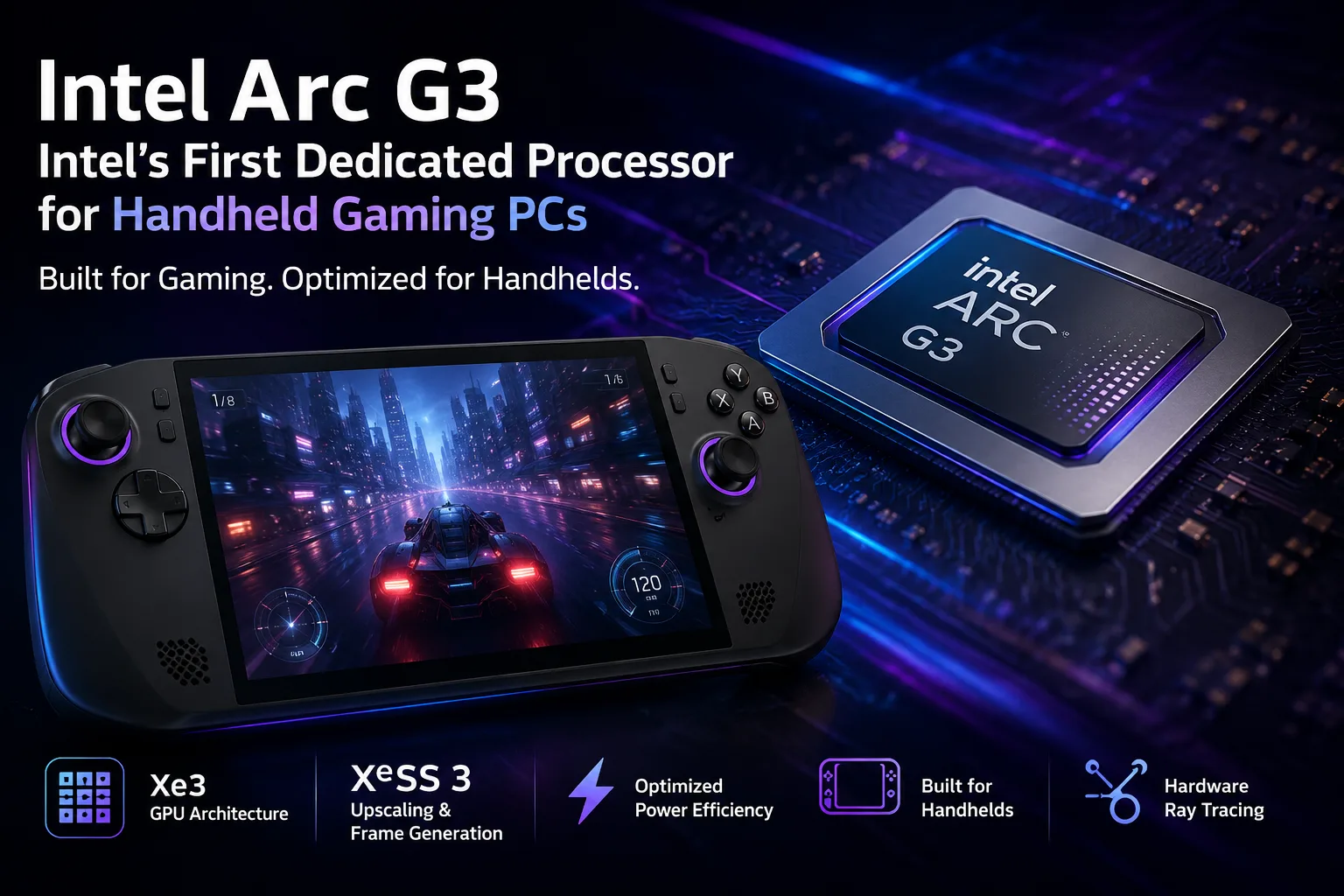
インテル Arc G3: ポータブルゲーミングPC向けの初の専用インテルプロセッサー

AMDはすでに数世代にわたり、ポータブルゲーミングPC向けの専用Ryzen Zプロセッサーを提供しています。Arc G3の登場までは、こうしたデバイスメーカーは通常のノートブック用インテル Core Ultraプロセッサーを使用していました。新しいシリーズはアプローチを変えます。コアの構成、グラフィックス、電源管理は、最初からゲーミングポータブルフォーマットに最適化されています。

インテルは、2つの高性能Pコア、8つのEコア、4つの低消費電力LP Eコアを残しました。この構成により、CPUの全体的な電力制限への負荷を軽減し、内蔵グラフィックスにさらに重きを置くことができます。

シリーズには、グラフィックスArc B370を搭載した基本のArc G3と、Arc B390を搭載した上位のArc G3 Extremeが含まれています。ポジショニングとしては、AMD Ryzen Z2とRyzen Z2 Extremeにそれぞれ競合します。ただし、独立したテストは主にExtremeバージョンのために公開されています。

Arc G3とG3 Extremeの違い

特徴 インテル Arc G3 インテル Arc G3 Extreme
最大CPUクロック 4.6 GHz 4.7 GHz
内蔵グラフィックス Intel Arc B370 Intel Arc B390
Xe3コア 10 12
最大GPUクロック 2.2 GHz 2.3 GHz

CPU構成、キャッシュ容量、基本電力はプロセッサーで同じです。主な違いはグラフィックスにあり、基本のG3にはXeコアが16.7%少なく、最大GPUクロックも若干低いです。

これはゲームでの遅れを意味するわけではありません。実際の違いは電力制限、メモリ速度、冷却、特定のデバイスの設定に依存します。

ゲーミングプロセッサーにPコアが2つだけの理由

Arc G3のコア数は印象的で、14コアおよび14スレッドです。しかし、実際にはパフォーマンスクラスに属するのは2つのコアだけです。残りはバックグラウンドプロセスやマルチスレッドタスク、低負荷時の省エネ動作を目的としています。

レンダリング、コンパイル、その他の重いCPU負荷に対して、この構成は4つまたは6つのPコアを備えたプロセッサーに劣るかもしれません。ポータブルゲーミングPCでは優先順位が異なり、CPUとGPUは共通の電力制限を分け合い、最終的なフレームレートはしばしばグラフィックスによって制限されます。

インテルはこのようなアプローチを「適正サイズのコンピューティング」と呼びます。プロセッサー部分はゲームに十分な速さを保つべきですが、バッテリー駆動のデバイスには過剰であってはいけません。

Xe3グラフィックスとXeSS 3

Arc G3は、内蔵グラフィックスXe3世代に重きを置いています。基本のArc B370は10個のXeコアを搭載し、ExtremeのArc B390は12個です。どちらもDirectX 12 Ultimateとハードウェアレイトレーシングをサポートしています。

パフォーマンスを向上させるのはXeSS 3技術です。これは画像スケーリング、インターレースフレーム生成、レイテンシの低減を含みます。ポータブルPCにとっては特に重要です:重いゲームでは、内蔵グラフィックスが受け入れ可能なフレームレートを維持するために、しばしば低解像度で画像を出力する必要があります。

ただし、フレーム生成は基本的なパフォーマンスを置き換えるものではありません。もしゲームが初めからスローモーションで動作している場合、FPSカウントは増加する可能性がありますが、操作の遅延やアーティファクトは依然として目立つでしょう。したがって、Arc G3はフレーム生成なしの結果によって評価する方が妥当です。

ベンチマーク: 現在はArc G3 Extremeのみ

基本のインテル Arc G3に関する独立したテストはまだ不足しています。最初の詳細な結果を持つ量産デバイスは、Arc G3 Extremeを搭載したMSI Claw 8 EX AI+です。

比較のために、以下にAMD Ryzen AI Z2 Extremeを搭載したASUS ROG Xbox Ally Xの結果を示します。すべての結果は同一のエディションから取得されていますが、テーブル内での正確な電力モードは明示されていません。このため、比較は単にプロセッサーだけでなく、完成したデバイスの性能を反映しています。

デバイス プロセッサー Fire Strike Time Spy Steel Nomad Port Royal
MSI Claw 8 EX AI+ Intel Arc G3 Extreme 12 358 6 534 1 425 3 544
ASUS ROG Xbox Ally X AMD Ryzen AI Z2 Extreme 9 141 4 033 609 1 999

MSI Clawは、4つのテストすべてでASUS ROG Xbox Ally Xよりも速かったです。その違いの一部は、プロセッサーだけでなく、電力設定、メモリ、冷却の設定にも関係している可能性があります。

最も大きな差はSteel NomadとPort Royalで見られました。特にPort Royalはレイトレーシングテストとして興味深いですが、結果は依然としてArc B390とAMDグラフィックスの純粋な比較として考慮すべきではありません。

ゲームテストでは、MSI Clawは1080pおよび中設定でBlack Myth: Wukongで34 FPSを記録し、XeSSをオンにした後は結果が56 FPSに向上しました。Cyberpunk 2077では1080pおよび高設定で、デバイスはXeSSなしで36.2 FPS、スケーリングありで51.1 FPSを出力しました。

これらの数値を基本のArc G3に直接適用することはできません。下位バージョンにはグラフィックブロックが少なく、最大GPUクロックも低いためです。実際のゲームでの違いがどれほど大きくなるかは、Arc B370を搭載したデバイスのテストによってのみ判明します。

限定された電力でのパフォーマンス

Arc G3にとって重要なのは、ピーク結果ではなく、15-25Wの範囲でのパフォーマンスです。この範囲内でポータブルデバイスは、FPS、熱、騒音、およびバッテリー寿命のバランスを取る必要があります。

現在、同一の電力制限の下での基本G3とRyzen Z2の比較可能なテストは存在しません。したがって、下位モデルの効率性とAMDに対する位置づけを評価することは現時点では不可能です。

インテル Arc G3を搭載したデバイス

インテルは、新しいプラットフォーム上の最初のポータブルゲーミングPCシリーズを3つ発表しました:

  • Acer Predator Atlas 8 - Arc G3およびArc G3 Extremeの構成;
  • MSI Claw 8 EX AI+ - Arc G3 Extreme;
  • OneXPlayer - Arc G3 Extremeを搭載したモデル。

MSIが最初に独立したテストが可能なデバイスをリリースしました。Acerは基本Arc G3の評価にとって重要です: Predator Atlas 8の下位構成が、Arc B370がB390にどの程度劣るのか、通常のRyzen Z2 と競えるのかを示す必要があります。

結論

Arc G3は、全市場向けの新しいタイプのプロセッサーではなく、AMD Ryzen Zファミリーに対する後れを取ったが理にかなったインテルの応答です。以前はポータブルゲーミングPC産業で一般的なCore Ultraが使用されていましたが、今やコア構成、電源管理、グラフィックは最初からハンドヘルドデバイス向けに設計されています。

最初のテストでは、MSI ClawのG3 ExtremeがRyzen AI Z2 Extremeを搭載したASUS ROG Xbox Ally Xを大きく上回りました。しかし、これは2つの完成品デバイスの比較であり、同じ電力でのプロセッサーの純粋なテストではありません。

基本のArc G3は、現時点では完全な独立した検証が行われていないモデルとして残っています。Arc B370はB390よりも穏やかに劣るはずですが、1080pでの実際のゲーム性能は量産デバイスのテスト後にのみ明らかになるでしょう。

基本

レーベル名
Intel
プラットホーム
Handheld
発売日
April 2026
モデル名
?
Intel プロセッサーの番号は、コンピューティングのニーズに適したプロセッサーを選択する際に、プロセッサーのブランド、システム構成、システムレベルのベンチマークとともに考慮すべきいくつかの要素の 1 つにすぎません。
G3
コード名
Products formerly Panther Lake

CPUの仕様

コア合計数
?
コアとは、単一のコンピューティング コンポーネント (ダイまたはチップ) 内の独立した中央処理装置の数を表すハードウェア用語です。
14
スレッド合計数
?
該当する場合、インテル® ハイパー・スレッディング・テクノロジーはパフォーマンス・コアでのみ利用可能です。
14
パフォーマンスコア
2
エフィシエンシーコア
8
Low Power Efficient-core Base Frequency
1.5 GHz
Low Power Efficient-core Max Turbo Frequency
3.1 GHz
Low Power Efficient-cores
4
Intel Virtualization Technology (VT-x)
?
Intel® Virtualization Technology (VT-x) allows one hardware platform to function as multiple “virtual” platforms. It offers improved manageability by limiting downtime and maintaining productivity by isolating computing activities into separate partitions.
Yes
Intel Virtualization Technology for Directed I/O (VT-d)
?
Intel® Virtualization Technology for Directed I/O (VT-d) continues from the existing support for IA-32 (VT-x) and Itanium® processor (VT-i) virtualization adding new support for I/O-device virtualization. Intel VT-d can help end users improve security and reliability of the systems and also improve performance of I/O devices in virtualized environments.
Yes
最大ターボ周波数
?
最大ターボ周波数は、インテル® ターボ・ブースト・テクノロジー、およびインテル® ターボ・ブースト・マックス・テクノロジー 3.0 (存在する場合) およびインテル® サーマル・ベロシティ・ブーストを使用してプロセッサーが動作できる最大シングルコア周波数です。 周波数は通常、ギガヘルツ (GHz)、つまり 1 秒あたり 10 億サイクルで測定されます。
4.6 GHz
基本周波数 (P)
1.9 GHz
基本周波数 (E)
1.5 GHz
効率的なコアの最大ターボ周波数
?
インテル® ターボ・ブースト・テクノロジーから得られる E コアの最大ターボ周波数。
3.3 GHz
Instruction Set Extensions
Intel® SSE4.1, Intel® SSE4.2, Intel® AVX2
ターボブースト周波数 (P)
?
インテル® ターボ・ブースト・テクノロジーから得られる最大 P コア・ターボ周波数。
4.6 GHz
Enhanced Intel SpeedStep Technology
?
Enhanced Intel SpeedStep® Technology is an advanced means of enabling high performance while meeting the power-conservation needs of mobile systems. Conventional Intel SpeedStep® Technology switches both voltage and frequency in tandem between high and low levels in response to processor load. Enhanced Intel SpeedStep® Technology builds upon that architecture using design strategies such as Separation between Voltage and Frequency Changes, and Clock Partitioning and Recovery.
Yes
Intel Turbo Boost Max Technology 3.0
?
Intel® Turbo Boost Max Technology 3.0 identifies the best performing core(s) on a processor and provides increased performance on those cores through increasing frequency as needed by taking advantage of power and thermal headroom.
Yes
Intel Turbo Boost Max Technology 3.0 Frequency
?
Intel® Turbo Boost Max Technology 3.0 identifies the best performing core(s) on a processor and provides increased performance on those cores through increasing frequency as needed by taking advantage of power and thermal headroom. Intel® Turbo Boost Max Technology 3.0 frequency is the clock frequency of the CPU when running in this mode.
4.6 GHz
Intel Turbo Boost Technology
?
Intel® Turbo Boost Technology dynamically increases the processor's frequency as needed by taking advantage of thermal and power headroom to give you a burst of speed when you need it, and increased energy efficiency when you don’t.
2.0
Cache
?
CPU Cache is an area of fast memory located on the processor. Intel® Smart Cache refers to the architecture that allows all cores to dynamically share access to the last level cache.
12 MB Intel® Smart Cache
ソケット
?
ソケットは、プロセッサとマザーボード間の機械的および電気的接続を提供するコンポーネントです。
FCBGA2540
Intel AES New Instructions
?
Intel® AES New Instructions (Intel® AES-NI) are a set of instructions that enable fast and secure data encryption and decryption. AES-NI are valuable for a wide range of cryptographic applications, for example: applications that perform bulk encryption/decryption, authentication, random number generation, and authenticated encryption.
Yes
製造プロセス
?
リソグラフィーとは、集積回路の製造に使用される半導体技術を指し、半導体上に構築されるフィーチャーのサイズを示すナノメートル (nm) で報告されます。
Intel 18A
プロセッサーの基本電力
?
SKU セグメントおよび構成のデータシートに指定されているベース周波数およびジャンクション温度でインテル指定の高複雑性ワークロードを実行する際に、プロセッサーが製造時に超えないことが検証された時間平均消費電力。
25 W
最大ターボパワー
?
電流および/または温度制御によって制限される、プロセッサーの最大持続 (>1 秒) 消費電力。 瞬間的な電力は、短期間 (<=10ms) に最大ターボ電力を超える場合があります。 注: 最大ターボ電力はシステム ベンダーによって構成可能であり、システム固有にすることもできます。
80 W
Minimum Assured Power
15 W
最高動作温度
?
ジャンクション温度は、プロセッサ ダイで許容される最大温度です。
100 °C
PCI Express バージョン
?
PCI Express リビジョンは、PCI Express 標準のサポートされているバージョンです。 Peripheral Component Interconnect Express (PCIe) は、ハードウェア デバイスをコンピュータに接続するための高速シリアル コンピュータ拡張バス規格です。 PCI Express のバージョンが異なれば、サポートされるデータ レートも異なります。
5.0 and 4.0
PCI Expressレーン数
?
PCI Express (PCIe) レーンは、2 つの差動信号ペア (1 つはデータ受信用、もう 1 つはデータ送信用) で構成され、PCIe バスの基本単位です。PCI Express レーンの最大数は、サポートされるレーンの合計数です。
12
指図書
?
命令セットは、CPU 内部に保存されているハード プログラムであり、CPU の動作をガイドおよび最適化します。 これらの命令セットを使用すると、CPU をより効率的に実行できます。 CPU を設計するメーカーは数多くあり、その結果、Intel 陣営の 8086 命令セットや ARM 陣営の RISC 命令セットなど、さまざまな命令セットが作成されます。 x86、ARM v8、および MIPS はすべて命令セットのコードです。 命令セットは拡張できます。 たとえば、x86 は、x86-64 を作成するために 64 ビットのサポートを追加しました。 特定の命令セットと互換性のある CPU を開発するメーカーは、命令セットの特許所有者からの許可を必要とします。 典型的な例は、Intel が AMD を認可し、AMD が x86 命令セットと互換性のある CPU を開発できるようにすることです。
64-bit
Intel 64
?
Intel® 64 architecture delivers 64-bit computing on server, workstation, desktop and mobile platforms when combined with supporting software.¹ Intel 64 architecture improves performance by allowing systems to address more than 4 GB of both virtual and physical memory.
Yes
Intel VT-x with Extended Page Tables (EPT)
?
Intel® VT-x with Extended Page Tables (EPT), also known as Second Level Address Translation (SLAT), provides acceleration for memory intensive virtualized applications. Extended Page Tables in Intel® Virtualization Technology platforms reduces the memory and power overhead costs and increases battery life through hardware optimization of page table management.
Yes
PCI Express Configurations
?
PCI Express (PCIe) Configurations describe the available PCIe lane configurations that can be used to link to PCIe devices.
x4 PCIe5 (1x4,2x2),
x4 PCIe4 (1x4, 2x2, 4x1)

メモリ仕様

メモリタイプ
?
インテル® プロセッサーには、シングル チャネル、デュアル チャネル、トリプル チャネル、フレックス モードの 4 つのタイプがあります。 複数のメモリ チャネルをサポートする製品でチャネルごとに複数の DIMM を装着すると、サポートされる最大メモリ速度が低下する可能性があります。
Up to LPDDR5X 8533 MT/s
最大メモリサイズ
?
最大メモリ サイズとは、プロセッサがサポートする最大メモリ容量を指します。
96 GB
最大メモリチャネル数
?
メモリ チャネルの数は、実際のアプリケーションの帯域幅動作を指します。
2

GPUの仕様

GPU Name
Intel® Arc™ B370 GPU
GPU最大動的周波数
2.2 GHz
Xe-cores
10
DirectX Support
?
DirectX* Support indicates support for a specific version of Microsoft’s collection of APIs (Application Programming Interfaces) for handling multimedia compute tasks.
DirectX 12 Ultimate
Max Resolution (DP)
?
Max Resolution (DP) is the maximum resolution supported by the processor via the DP interface (24bits per pixel & 60Hz). System or device display resolution is dependent on multiple system design factors; actual resolution may be lower on your system.
7680 x 4320 @ 60Hz
Max Resolution (eDP - Integrated Flat Panel)
?
Max Resolution (Integrated Flat Panel) is the maximum resolution supported by the processor for a device with an integrated flat panel (24bits per pixel & 60Hz). System or device display resolution is dependent on multiple system design factors; actual resolution may be lower on your device.
3840 x 2400 @ 120Hz
Number of Displays Supported
2
Graphics Output
?
Graphics Output defines the interfaces available to communicate with display devices.
eDP1.5, DP 2.1 UHBR20, HDMI 2.1 FRL
OpenGL Support
?
OpenGL (Open Graphics Library) is a cross-language, multi-platform API (Application Programming Interface) for rendering 2D and 3D vector graphics.
4.6
OpenCL Support
?
OpenCL (Open Computing Language) is a multi-platform API (Application Programming Interface) for heterogeneous parallel programming.
3.0
Intel Quick Sync Video
?
Intel® Quick Sync Video delivers fast conversion of video for portable media players, online sharing, and video editing and authoring.
Yes

AI仕様

CPU 上の Intel Deep Learning Boost (Intel DL Boost)
?
AI ディープ ラーニングのユースケースを加速するために設計された新しい一連の組み込みプロセッサ テクノロジ。 新しいベクトル ニューラル ネットワーク命令 (VNNI) でインテル AVX-512 を拡張し、前世代に比べて深層学習の推論パフォーマンスを大幅に向上させます。
Yes

インターフェースとポート

Intel Volume Management Device (VMD)
?
Intel® Volume Management Device (VMD) provides a common, robust method of hot plug and LED management for NVMe-based solid state drives.
Yes

その他

公式ウェブサイト
Intel Standard Manageability (ISM)
?
Intel® Standard Manageability is the manageability solution for Intel vPro® Essentials platforms and is a subset of Intel® AMT with out-of-band management over Ethernet and Wi-Fi, but no KVM or new life cycle management features.
Yes
Execute Disable Bit
?
Execute Disable Bit is a hardware-based security feature that can reduce exposure to viruses and malicious-code attacks and prevent harmful software from executing and propagating on the server or network.
Yes
Intel Active Management Technology (AMT)
No
Intel High Definition Audio
Yes
Intel Boot Guard
?
Intel® Device Protection Technology with Boot Guard helps protect the system’s pre-OS environment from viruses and malicious software attacks.
Yes
Intel Control-Flow Enforcement Technology
?
CET - Intel Control-flow Enforcement Technology (CET) helps protect against the misuse of legitimate code snippets through return-oriented programming (ROP) control-flow hijacking attacks.
Yes
Intel OS Guard
Yes